

Weller PCB Explains IPC Standards for Quality Control
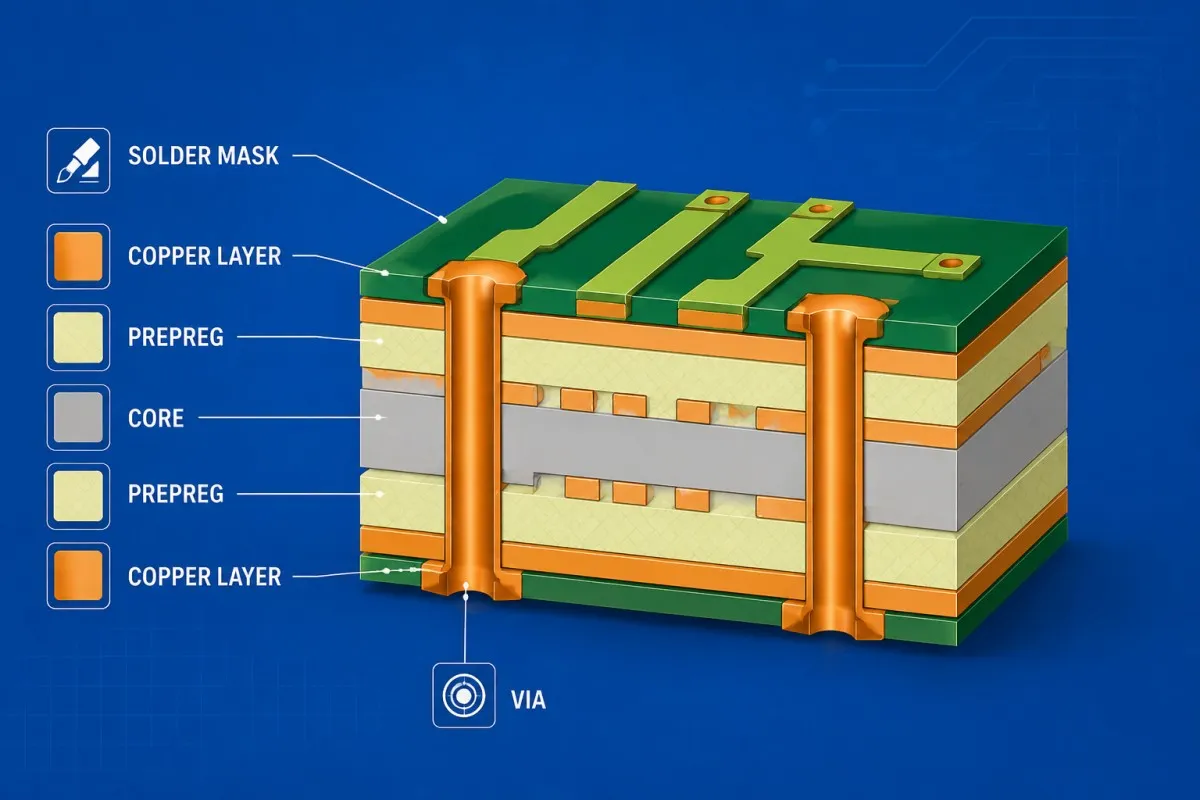
For products such as industrial controllers, communication equipment, power electronics, and other reliability-focused electronic systems, PCB quality depends on more than final inspection results. It requires alignment between design specifications, material selection, fabrication processes, assembly requirements, and acceptance criteria.
The new resource examines three widely referenced IPC standards IPC-6012, IPC-A-600, and IPC-A-610 and explains how they relate to rigid PCB qualification, finished board acceptance, and electronic assembly workmanship requirements.
Applying IPC Standards to Real PCB Manufacturing Processes
In PCB manufacturing, quality control begins before production starts.
A rigid multilayer PCB requires careful control of multiple manufacturing factors, including:
• Material selection and laminate performance
• Layer registration and fabrication accuracy
• Copper thickness and surface finishing
• Solder mask and silkscreen quality
• Electrical testing and inspection procedures
IPC-6012 defines qualification and performance requirements for rigid printed boards, while IPC-A-600 provides acceptance criteria for finished PCB conditions. During electronic assembly operations, IPC-A-610 establishes requirements for evaluating assembly workmanship and product acceptance.
Weller PCB explains the relationship between these standards in its IPC-6012, IPC-A-600, and IPC-A-610 PCB standards guide, helping engineering teams understand how quality requirements are translated into manufacturing decisions.
Engineering Support for Quality-Focused PCB Production
Meeting IPC requirements requires more than selecting the correct standard. Manufacturers must also have the engineering experience, process control, and production capability needed to consistently meet customer specifications.
Through its engineering-focused PCB manufacturing services, Weller Technology Co. Ltd. supports customers with PCB fabrication, engineering review, manufacturing coordination, assembly support, and quality management processes.
The company works with OEMs and engineering teams during key development stages, including design review, prototype evaluation, supplier communication, and production preparation.
Supporting Better Supplier Evaluation and Manufacturing Decisions
During PCB supplier qualification, OEM engineering and sourcing teams typically evaluate fabrication capability, process control, and quality requirements before moving designs into production.
For applications with stricter reliability requirements, OEM teams may also reference IPC Class 2 and Class 3 PCB requirements when defining acceptance criteria.
A clear understanding of IPC standards helps engineering and sourcing teams:
• Define manufacturing requirements more accurately
• Evaluate supplier capabilities during qualification
• Improve communication between design and production teams
• Establish measurable quality expectations
“IPC standards provide an important reference point, but successful PCB production also depends on how well engineering requirements are connected with manufacturing processes,” said Kevin Duan of Weller Technology Co. Ltd. “Our focus is helping customers achieve better alignment between design goals, production capability, and quality expectations.”
Weller PCB continues to develop engineering resources and manufacturing capabilities for companies requiring consistent PCB performance, production reliability, and effective manufacturing collaboration.
About Weller Technology Co. Ltd.
Weller Technology Co. Ltd. is an engineering-focused PCB manufacturing partner based in Shenzhen, China, supporting OEMs, hardware developers, and engineering teams with PCB production and electronic manufacturing requirements.
The company provides support across PCB fabrication, PCB assembly, engineering review, and production coordination, helping customers move from initial design concepts to manufacturable electronic products.
By combining PCB manufacturing experience with engineering communication, Weller Technology Co. Ltd. focuses on improving manufacturability, maintaining quality consistency, and supporting reliable production throughout the product development cycle.
Media Contact
Address: 4/F, Bldg.3, Huafeng Longgang Overseas Returnees Ind. Park,
Baolong 1st Rd, Nanyue Community, Baolong Street,
Longgang District, Shenzhen, Guangdong, China
Postal Code: 518116
Website - https://wellerpcb.com/
LinkedIn: Weller PCB
https://www.linkedin.com/company/wellerpcbs/
Kevin Duan
Weller Technology Co. Ltd.
kevinedard.dw@gmail.com
Legal Disclaimer:
EIN Presswire provides this news content "as is" without warranty of any kind. We do not accept any responsibility or liability for the accuracy, content, images, videos, licenses, completeness, legality, or reliability of the information contained in this article. If you have any complaints or copyright issues related to this article, kindly contact the author above.
