

Analyzing the Impact of Advanced Equipment on China Best Precision CNC Machining Services Provider Performance
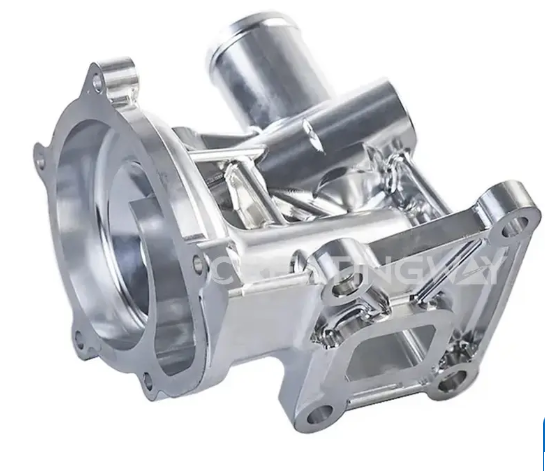
China Best Precision CNC Machining Services Provider
The modern manufacturing landscape is defined by an uncompromising pursuit of accuracy and efficiency. As global industries from aerospace to medical devices evolve, the demand for intricate components with microscopic tolerances has reshaped the role of contract manufacturers. In this high-stakes environment, the integration of multi-axis technology and automated control systems has become the primary differentiator for excellence. Selecting a China Best Precision CNC Machining Services Provider no longer hinges solely on labor capacity; instead, it depends on the sophisticated synergy between engineering expertise and the advanced machinery that translates digital blueprints into tangible, high-performance hardware.
The Architecture of High-Precision Fabrication
Precision in machining is not a static goal but a continuous evolution of technical capabilities. At Creatingtec, the foundation of every project lies in a diverse suite of machining services designed to address the multifaceted needs of modern engineering. By leveraging a comprehensive range of processes—including CNC turning, milling, wire EDM, finishing, and surface grinding—the facility operates as a centralized hub for complex production.
The technical core of these operations is centered around advanced 3, 4, and 5-axis CNC machining centers. Unlike traditional 3-axis setups that are limited to linear movements along the X, Y, and Z axes, 4 and 5-axis machines introduce rotational capabilities. This allows cutting tools to approach a workpiece from virtually any direction, enabling the fabrication of complex geometries that were previously considered impossible or required multiple, time-consuming setups. For engineers and designers, this translates to parts with superior structural integrity and fewer potential points of failure.
Furthermore, these CNC capabilities serve as a critical complement to 3D printing services. While additive manufacturing is ideal for rapid prototyping and complex internal lattices, CNC machining provides the final subtractive touch necessary to achieve functional surface finishes and the exact tolerances required for mechanical assemblies. This hybrid approach ensures that creative designs are not limited by the boundaries of a single manufacturing method.
Subtractive Technology and the Mastery of Material
The essence of CNC machining remains a subtractive process, where raw material is systematically removed from a solid workpiece using precision cutting tools. To ensure that this removal process is both accurate and repeatable, Creatingtec employs industry-leading CAM software and U/G (Unigraphics) platforms. These digital tools serve as the bridge between a client’s 3D design specifications and the physical movements of the machine.
By utilizing sophisticated programming, engineers can optimize every variable of the cutting cycle. This includes calculating the most efficient tool paths to reduce heat generation, selecting optimal spindle speeds for specific materials, and fine-tuning feed rates to enhance the final surface finish. Such meticulous control is essential for achieving the tight tolerances demanded by the most rigorous industry standards.
Beyond individual parts and functional prototypes, this technology plays a pivotal role in the creation of mold tools. These high-precision molds are the backbone of larger-scale manufacturing processes, such as pressure die casting and plastic injection molding. The ability to machine these tools with extreme accuracy ensures that thousands of subsequent parts produced from the mold will maintain consistent quality and dimensional stability.
Rotational Accuracy in CNC Turning
CNC lathes represent a specific branch of precision machining focused on rotational symmetry. These machines perform quality turning at high speeds, accommodating both metallic and plastic substrates. The turning process is particularly effective for components requiring complex external geometries and precise internal bores, such as shafts, bushings, and specialized fittings.
For clients involved in low-volume production or initial prototype phases, CNC turning offers a cost-effective route to high-quality results. By maintaining a lean production workflow, the facility can pivot quickly between different designs, providing the flexibility needed in the early stages of product development where design iterations are frequent.
Complex Geometry and Milling Innovation
Complementing the turning department is the CNC milling sector, which is instrumental in achieving superior machined surface finishes and intricate 3D shapes. The facility utilizes a strategic mix of domestic and high-end imported machining centers, ensuring that the right equipment is matched to the specific complexity of the job.
One of the key technological advantages in this department is the use of advanced Delcam software. This software streamlines the transition between different machining phases and allows for rapid tool changes, significantly reducing downtime. When a China Leading CNC turning services provider integrates these milling capabilities, the result is a seamless manufacturing workflow where parts can move between rotational and prismatic machining environments without loss of precision.
Material Versatility and Design Freedom
One of the most significant advantages of modern CNC machining is its compatibility with an extensive array of materials. From soft metals like magnesium and brass to high-strength stainless steels and titanium, the equipment is designed to handle varying levels of hardness and thermal conductivity. Even challenging superalloys, such as Inconel, which are notorious for their difficulty to machine, can be processed with the right tooling and cooling strategies.
In addition to metals, the technology extends to rigid engineering plastics and carbon fiber. This versatility provides product developers with immense design freedom. Whether the goal is to reduce weight in an automotive component or ensure biocompatibility in a medical tool, the availability of diverse substrate options ensures that the material properties can be perfectly aligned with the intended application.
To support this material diversity, a dedicated testing laboratory provides an essential layer of quality assurance. Using positive material identification (PMI), every piece of incoming stock is verified against its certification. Providing a full physical analysis is the only way to guarantee that the raw materials meet the specific performance and regulatory demands of the client.
Technical Advantages for Product Development
The transition from a design concept to a finished product is fraught with technical challenges. Advanced machining services provide a robust solution to these hurdles through several key advantages:
Speed of Execution: High-speed spindles and optimized tool paths allow for rapid material removal, accelerating the production timeline.
Precision and Consistency: Tight tolerances are maintained across large production runs, ensuring that every part is a perfect replica of the digital model
Geometric Flexibility: The use of 5-axis centers allows for the creation of undercuts and complex angles that are difficult to achieve through other means.
Professional wire EDM services from China: For extremely hard materials or parts with intricate internal shapes that traditional bits cannot reach, electrical discharge machining provides a non-contact solution that maintains the highest levels of accuracy without inducing mechanical stress on the part.
Furthermore, CNC machining requires a relatively low investment in tooling compared to processes like injection molding, making it an excellent choice for both small and unlimited volumes. The result is a fast turnaround for full-strength parts that feature excellent surface finishes and are easily customized to meet evolving market needs.
Evolving Trends in the Manufacturing Sector
The global industrial sector is currently witnessing a shift toward localized "micro-factories" and highly specialized service providers. While the scale of production remains important, the value has shifted toward the ability to handle high-complexity, low-volume orders with the same efficiency as mass production. Digital integration is at the heart of this change, with the "Internet of Things" (IoT) and real-time data analytics allowing manufacturers to monitor machine health and production accuracy in real-time.
As supply chains become more fragmented, the reliability of a manufacturing partner becomes paramount. Companies are increasingly looking for providers who not only possess the physical machinery but also the intellectual capital to suggest design improvements that enhance manufacturability (DFM). This collaborative approach reduces waste, lowers costs, and speeds up the time-to-market for innovative products.
Innovation and Market Competitiveness
Staying competitive in the international market requires a relentless commitment to upgrading equipment and refining internal processes. The integration of high-end software with multi-axis hardware allows for a level of sophistication that smaller, traditional shops cannot match. By focusing on precision and the ability to work with advanced alloys, a manufacturer can position itself as an essential link in the supply chains of critical industries.
The emphasis on quality control, from material verification to final inspection using coordinate measuring machines (CMM), ensures that every component leaving the facility adheres to the highest global standards. This commitment to excellence is what builds long-term trust with international partners and ensures the continued growth of the manufacturing ecosystem.
The future of precision manufacturing lies in the balance between human ingenuity and machine capability. As equipment becomes more advanced, the role of the engineer shifts from manual operation to high-level system optimization. This ensures that the potential of the hardware is fully realized, providing clients with parts that are not only accurate but also optimized for their specific functional requirements. By prioritizing technical investment and material science, manufacturers can continue to meet the challenges of an increasingly complex industrial world.
The synthesis of multi-axis machining, advanced CAM software, and rigorous material testing creates a manufacturing environment where precision is a standard, not an exception. Whether creating a single prototype or a production run of thousands, the focus remains on delivering components that fulfill the exact specifications of the design. For those seeking reliable, high-specification fabrication, the integration of these advanced technologies provides a clear path to success in any engineering endeavor.
To explore more about these technical capabilities and see how precision machining can transform your next project, visit https://www.creatingtec.com/
China Best Precision CNC Machining Services Provider
China Best Precision CNC Machining Services Provider
+862784471955 ext.
frena.yin@gmail.com
Legal Disclaimer:
EIN Presswire provides this news content "as is" without warranty of any kind. We do not accept any responsibility or liability for the accuracy, content, images, videos, licenses, completeness, legality, or reliability of the information contained in this article. If you have any complaints or copyright issues related to this article, kindly contact the author above.
